The Cold Truth: How Chilled Water Systems & Pre-Insulated Pipe Supports Safeguard Dairy Production

February 3, 2026

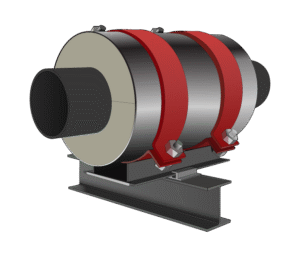
Pre-Insulated pipe supports from Pipe Shields can help safeguard dairy production.

Dairy processing is a race against time and temperature. From pasteurization to fermentation, precise thermal control is key, not only for product quality but, more critically, for food safety. At the heart of many dairy operations lies the unsung hero: the chilled water system. This intricate network is responsible for rapidly cooling dairy products, maintaining optimal storage temperatures, and supporting critical processes.

But what happens when this essential system isn’t perfectly insulated? The answer can lead to significant issues, including energy waste, operational downtime, and a heightened risk of microbial contamination. This is where the science of chilled water meets the innovation of pre-insulated pipe supports.

The Role of Chilled Water in Dairy Processing

Chilled water, or glycol-chilled water, is critical for temperature control in a dairy plant. It’s circulated through heat exchangers and jacketed vessels to perform a multitude of functions:

  • Rapid Cooling Post-Pasteurization: After pasteurization (a process that heats milk to destroy harmful bacteria), milk must be rapidly cooled to a safe storage temperature to prevent the growth of thermophilic organisms and maintain its quality. Chilled water systems are essential for this rapid thermal transition.
  • Temperature Control During Fermentation: For products such as yogurt and cheese, precise temperature control is essential to enable specific bacterial cultures to thrive and produce the desired flavors and textures.
  • Ingredient Cooling: Many ingredients, such as cream, cultures, or flavorings, require specific cold temperatures before being added to products.
  • Equipment Cooling: Chilled water can also be used to cool processing equipment, preventing overheating and ensuring consistent operation.
  • Storage and Distribution: Maintaining low temperatures throughout storage tanks and distribution lines is crucial to extending shelf life and preventing spoilage.

Without an efficient, reliable chilled-water system, dairy products would be susceptible to bacterial growth, spoilage, and reduced shelf life.

The Silent Threat: Condensation and Microbial Growth

While chilled water is beneficial, its low temperature introduces a potential hazard: condensation. When cold pipes carrying chilled water are exposed to warmer, humid ambient air, the air’s moisture condenses on the pipes’ outer surfaces. This is the same phenomenon you see on a cold drink glass on a hot day. Why is condensation a problem in a dairy plant?

The Ideal Breeding Ground for Mold and Bacteria

  • Moisture Source: Condensation provides a constant source of moisture, a key factor in the growth of mold and bacteria.
  • Organic Matter: Even in the cleanest environments, airborne dust and microscopic organic particles can settle on moist surfaces, providing a food source for microbes.
  • Compromised Hygiene: Condensation dripping onto processing equipment, floors, or even directly onto products creates an unsanitary environment, increasing the risk of cross-contamination and compromising stringent food safety standards.
  • Insulation Degradation: Over time, condensation can saturate traditional insulation materials, reducing their effectiveness and leading to further energy loss, which in turn drives a cycle of increased condensation.

In production, when hygiene and product safety are non-negotiable, visible mold or bacterial growth on pipe surfaces is not only an aesthetic issue but a critical food safety concern that can lead to product recalls, reputational damage, and regulatory penalties.

The Solution: Pre-Insulated Pipe Supports as the First Line of Defense

This is where pre-insulated pipe supports are indispensable for any dairy processing facility that uses chilled-water systems. They are specifically designed to address condensation and thermal bridging.

How Pre-Insulated Pipe Supports Combat Condensation and Contamination:

  1. Continuous Thermal Barrier: Unlike conventional supports that interrupt the insulation, pre-insulated supports integrate a high-density, closed-cell insulating material directly into their structure. This creates a seamless thermal envelope around the pipe, preventing cold spots and eliminating thermal bridges where condensation typically forms.
  2. Prevents Surface Condensation: By maintaining the support’s outer-surface temperature above the dew point of the surrounding air, these supports effectively prevent condensation on the surface. No condensation means no breeding ground for mold and bacteria.
  3. Hygienic Design: Many pre-insulated supports for food environments feature non-porous, easy-to-clean outer jackets (e.g., PVC or stainless steel cladding). This design minimizes crevices where pathogens can accumulate, enabling thorough washdowns, which are essential for maintaining sanitary conditions.
  4. Energy Efficiency: Beyond preventing contamination, eliminating thermal bridging significantly reduces heat gain into the chilled water system. This reduces chiller workloads, resulting in substantial energy savings and lower operational costs for the dairy plant.
  5. Long-Term Durability: By preventing insulation saturation, pre-insulated supports ensure the longevity and consistent performance of the entire insulation system, reducing maintenance needs and extending the lifespan of the piping infrastructure.

By strategically installing pre-insulated pipe supports throughout chilled-water systems, dairy plants can mitigate condensation risks, ensuring a hygienic processing environment and the integrity of their dairy products.

Safeguarding Your Dairy Operations with Pipe Shields

In dairy processing, maintaining hygiene and precise temperature control is essential. Pipe Shields understands these critical needs. Our advanced pre-insulated pipe supports are engineered to provide an uninterrupted insulation barrier, which helps prevent condensation on chilled-water lines. By eliminating moisture accumulation on pipe surfaces, Pipe Shields helps dairy plant operations proactively prevent the conditions that lead to mold and bacterial growth, ensuring food safety compliance, reducing contamination risks, and protecting your valuable products and reputation.

Improve the hygiene and safety of your dairy processing facility.  Request a quote and discover how our pre-insulated pipe support solutions can fortify your cold chain operations.

Read More
Pre-Insulated vs. Welded: Why Choose Pre-Insulated Pipe Supports Over Direct-to-Pipe Attachment

December 16, 2025

Carousel images 04 01

The Foundation of Long-Term Pipe Performance

When it comes to industrial and commercial piping, the choice of pipe support is not a minor detail—it’s a critical decision that impacts your operational budget, energy footprint, and system lifespan. While direct-to-pipe attachment might seem like the simpler option, it introduces fundamental flaws that lead to high long-run costs.

This article explores why choosing pre-insulated supports from Pipe Shields is the superior strategy compared to conventional direct welding or attachment, delivering unmatched benefits in energy efficiency, reduced heat loss, long-term budget savings, easy, cost-effective maintenance, and pipeline protection.

The Hidden Costs of Direct-to-Pipe Attachment

Directly attaching or welding a support to a pipe, often called a “hard connection,” creates a severe thermal and mechanical weak point.

The Thermal Leak: Heat Loss and Energy Waste

A metal support welded directly to a hot or cold insulated pipe bypasses the insulation, creating a “thermal bridge.” This metal pathway acts like a heat sink (for hot pipes) or a heat source (for cold pipes), rapidly transferring thermal energy to the outside environment or the support structure.

  • Massive Energy Inefficiency: This constant heat transfer leads to substantial energy loss, forcing systems to work harder, consuming more fuel or electricity, and inflating utility bills. What you save on installation, you quickly spend on wasted energy.
  • Condensation Risk: In cryogenic or chilled water systems, the cold surface of the support where it meets the pipe drops below the ambient dew point, causing immediate condensation. This moisture saturation destroys the adjacent conventional insulation, leading to Corrosion Under Insulation (CUI)—an expensive form of pipe degradation.

The Structural Risk: Damage and Leaking

Direct welding introduces material stress and maintenance complexity:

  • Stress Concentrations: Welding alters the metallurgy of the pipe material at the connection, creating a high-stress concentration. Over time, due to thermal expansion, vibration, and system pressure, this can lead to fatigue cracking and potential leaking.
  • Complex Maintenance: If the support needs repair or replacement, it often requires cutting and re-welding, which demands extensive downtime and specialized labor, whereas minimal/no welding is required for initial installation with pre-insulated supports.

The Pipe Shields Advantage: Why Pre-Insulated Supports Win

Pre-insulated supports are engineered to solve the inherent problems of direct attachment, offering a solution that pays for itself over the life of the pipeline.

1. Eliminating the Thermal Bridge

Pre-insulated supports feature a high-density, load-bearing insulation material (such as calcium silicate or polyisocyanurate) that is factory-installed between the pipe and the metal support shield.

  • Maximum Heat Retention: The load-bearing insulation material provides a continuous thermal break, effectively preventing heat loss or gain and ensuring the insulation system remains intact. This adherence to thermal specifications is crucial for long-run budget savings through sustained energy efficiency.
  • CUI Prevention: By maintaining the pipe surface temperature above the dew point, these supports prevent condensation that causes CUI, actively protecting the pipeline from damage and leaks.

2. Easy, Economic, and Non-Invasive Installation

Pipe Shields’ pre-engineered solutions are designed for speed and simplicity.

  • Minimum and No Welding Required: Unlike complex connections, pre-insulated supports typically clamp onto the pipe. This non-invasive method eliminates the need for hot-work permits and costly field welding, significantly reducing installation time and costs.
  • Economic Maintenance: Because they are bolted or clamped, the supports can be easily inspected, maintained, or replaced without damaging the pipe or disrupting the thermal integrity of the system. This translates directly into easy, cost-effective maintenance.

3. Long-Term System Integrity

The use of a support shell and a load-bearing insert ensures that the mechanical load on the pipe is evenly distributed across its surface without damaging the pipe or the insulation, protecting the overall system from premature failure.

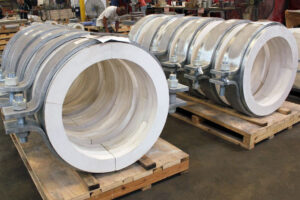
Pre-Insulated Pipe Supports for High Temperatures at a Phenol Plant in Texas

Choosing pre-insulated supports is not an expense; it is a vital investment in the long-term reliability and cost-effectiveness of your operation.

While direct attachment offers a minimal upfront cost saving, it guarantees ongoing energy waste, thermal failure, and future maintenance nightmares. Pipe Shields’ pre-insulated supports deliver a complete solution that maximizes energy performance, ensures code compliance, and future-proofs your pipeline against corrosion and structural failure.

Ready to Eliminate Thermal Bridges and Slash Operating Costs?

Invest in Pipe Shields’ pre-insulated pipe supports to slash energy waste, eliminate costly maintenance, and ensure the long-term efficiency of your critical piping systems. Pipe Shields pioneered the pre-insulated support now known across the industry as a pipe shield. We’re ready to leverage 50 years of experience to protect your pipeline and connected components.

Request a custom quote on how our pre-insulated support solutions can be engineered to deliver superior energy efficiency and long-term savings for your next project. Don’t let your supports be your system’s weakest link—build on a solid foundation with Pipe Shields.

Read More

Field Services Guide: The Top 5 Pre-Insulated Pipe Support Maintenance Challenges

November 18, 2025

Insulated pipe support from Pipe Shields and Piping Technology and ProductsThe Critical Role of Pre-Insulated Pipe Supports: Where Systems Fail First
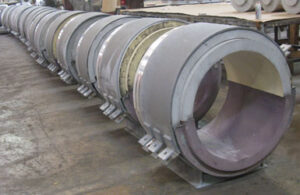

Pre-insulated pipe supports are critical to any industrial or HVAC piping system, yet they are often the first point of a problem. For pre-insulated (or cryogenic) lines, the pre-insulated pipe support point is a critical connection where thermal, mechanical, and environmental stresses converge. When the insulation or protective jacket fails at this pre-insulated pipe support point, you don’t just lose efficiency: you create a pathway for the “rot” of Corrosion Under Insulation (CUI), excessive heat loss/gain, and mechanical failure. The Pipe Shields Field Services Team provides rapid diagnostics and practical, permanent solutions to address these weak links before a minor repair becomes an expensive, system-wide shutdown.

5 Maintenance Nightmares and Your Pipe Shields Field Repair Playbook

The most common issues found during inspections of pre-insulated pipe supports require a rapid, focused response. Here are the top five challenges and the field-ready fixes implemented by the Pipe Shields Field Services Team.

1. Challenge: Insulation Compression and Crushing

The weight of the pipe, fluid, and external forces compress the insulation material (e.g., foam, calcium silicate, polyurethane, or cellular glass) directly under the pipe clamp or pre-insulated pipe support shoe. This compression drastically reduces the insulation’s R-value, creating an immediate thermal short circuit and rapid temperature change at the pre-insulated pipe support point.

  • Pipe Shields Field Service Solution: The Pipe Shields team immediately replaces the crushed insulation section with proprietary, high-density pipe shield inserts. We custom-fit and install specialized load-bearing material (such as Phenolic or Polyurethane) with a certified, continuous vapor seal, guaranteeing zero-compression protection and permanently stopping the thermal short circuit at the pre-insulated pipe support.

2. Challenge: Corrosion Under Insulation (CUI)

Water ingress, often originating from a breach in the outer jacket near the pre-insulated pipe support, gets trapped between the pipe wall and the insulation. This creates a perfect, oxygen-starved environment for severe pipe wall thinning or pitting, a phenomenon known as CUI. This is the single greatest threat to the integrity of pre-insulated pipe supports.

  • Pipe Shields Field Service Solution: Our CUI specialists conduct a targeted, non-destructive inspection (NDT) to assess the pipe wall integrity. If CUI is confirmed, the Pipe Shields team will strip the compromised insulation, clean the pipe surface, apply necessary surface preparations (coatings or wraps), and then re-insulate with an impervious Pipe Shield system that features a permanent moisture barrier, eliminating the source of future CUI at the pre-insulated pipe support.

3. Challenge: Jacket/Vapor Barrier Compromise

The outer aluminum, PVC, or stainless steel jacket is the first line of defense. Tears, punctures, or improperly sealed seams allow atmospheric moisture to enter the insulation, worsening all other problems. Field workers often overlook small tears in the jacket of the pre-insulated pipe support, which can lead to systemic failure.

  • Pipe Shields Field Service Solution: The team’s primary focus is rapid barrier restoration. For minor damage, we utilize specialized, industrial-grade mastics and vapor-proof tapes to achieve a rapid, hermetic seal. For significant jacket damage around the pre-insulated pipe support, we provide and install pre-fabricated, bolt-on jacketing patches with meticulously sealed overlaps to restore a complete, continuous vapor barrier and protect the newly installed Pipe Shield.

4. Challenge: Improper Hanger or Clamp Alignment

If the pipe hanger or clamp isn’t perfectly aligned or if the attachment bolts are loose, the pipe can shift, causing abrasion against the pre-insulated pipe support shoe or bracket. This movement grinds away the insulation jacket and integrity over time.

  • Pipe Shields Field Service Solution: Our technicians begin with a mechanical audit, inspecting and retorquing all attachment hardware to specification. Following this, the team installs custom-engineered hardware, such as pipe guides, stops, or specialized clamps, that properly integrate with our Pipe Shield inserts at the pre-insulated pipe support. This ensures the line is securely held in position, eliminating friction-related insulation damage and preventing costly movement.

5. Challenge: Frost/Ice Formation (Cryogenic/Refrigeration Lines)

On cold lines, a compromised pre-insulated pipe support or thermal short circuit will manifest immediately as a ring of frost or ice build-up around the pipe support point. This signals a total insulation failure and continuous energy loss, adding significant weight stress and potential damage.

  • Pipe Shields Field Service Solution: The presence of ice triggers an emergency thermal repair. The Pipe Shields team is dispatched to safely de-ice, strip, and thoroughly dry the pre-insulated pipe support area (a critical step often missed by general crews). We then rapidly install our proprietary, closed-cell, water-resistant Pipe Shield inserts, designed for cryogenic applications, immediately restoring the R-value and providing an intact, durable vapor-barrier system that prevents future ice formation at the pre-insulated pipe support.

Guarantee R-Value Integrity at Every Hanger Point with Pipe Shields

Cryogenic pre insulated pipe supports

The moment standard insulation material comes into contact with a hanger or clamp, its thermal efficiency is compromised. We solved this critical engineering flaw. Our engineered load-bearing pre-insulated pipe supports use high-density, zero-compression material, integrated with a continuous, permanent vapor seal, to maintain the insulation’s intended R-value precisely at the hanger point. This guarantees thermal performance and eliminates the primary pathway for CUI and energy loss across your entire pre-insulated system.

Don’t Wait for the Drip! System failure starts with a single compromised pre-insulated pipe support. Is your maintenance team equipped to handle these top 5 challenges quickly and permanently? Contact the Pipe Shields Field Services Team today to schedule an on-site audit of your critical infrastructure and discover how our integrated service solutions can permanently end CUI and insulation compression in your facility.

Read More

Choosing the Right Pre-Insulated Pipe Support

September 22, 2025

Insulated pipe support

Many facility owners and engineers assume pre-insulated pipe supports are only necessary for extreme temperature applications such as cryogenic or high-temperature steam lines. However, even when a pipe’s surface temperature feels “not that hot or cold,” pre-insulated supports can provide significant benefits in safety, efficiency, and long-term reliability. This article will help you understand the various types of pre-insulated pipe supports available, so you can select a solution that provides the necessary protection without over-engineering or overspending.

Why Pre-Insulated Pipe Supports Matter

1. Preventing Thermal Bridging

Moderate-temperature fluids can create temperature differences between pipes and supports. Without insulation, the support acts as a thermal bridge, causing heat loss or condensation, leading to increased energy loss, corrosion under insulation (CUI), and inconsistent system temperatures.

2. Controlling Condensation

When pipes are cooler than ambient air (e.g., in chilled water or HVAC lines), condensation can occur. This results in dripping hazards, mold, and corrosion of structural steel and hangers. Even pipes at 50–60 °F (10–16 °C) can sweat in humid conditions.

3. Maintaining Process Stability

For temperature-sensitive processes, small fluctuations impact product quality or efficiency. Pre-insulated supports ensure stable temperature profiles throughout the line.

Design Considerations: Selection Guide

1. Proper Support Selection

  • Pre-Insulated Pipe Shoes: Provide load-bearing insulation while elevating the pipe to prevent moisture accumulation and protect against corrosion.
  • High-Density Inserts: Distribute the load while minimizing insulation compression.
  • Vapor Barriers: Essential for chilled or sub-ambient lines to prevent moisture ingress.

2. Material Choices

  • Polyurethane Foam (PUF): Good for chilled water and moderate cold applications.
  • Calcium Silicate or Mineral Wool: Suitable for moderately hot lines
  • Phenolic Foam or Aerogel: Lightweight options with superior thermal resistance.

3. Installation Tips

  • Ensure continuous insulation without gaps at support points.
  • Use proper cladding or jacketing to prevent water intrusion.
  • Verify the compressive strength of insulation matches the pipe load.

Practical Examples

Selecting the correct pre-insulated support involves matching the support type to the temperature and load requirements of your application. 

Don’t let temperature fluctuations undermine the performance of your entire system. Choosing the right pre-insulated pipe supports is a wise investment that pays for itself through energy savings and reduced maintenance costs.

Application Fluid Temp Range Reason for Insulated Supports
Chilled Water HVAC Lines for datacenters, Semiconductor fabs, and Pharmaceuticals 40–55 °F (4–13 °C) Prevent sweating and corrosion
Mild hot-water process lines  120–180 °F (49–82 °C) Energy efficiency and personnel safety
Food & Beverage pipelines Ambient to 150 °F Sanitary conditions and temperature control

Key Takeaways

  • “Not that hot or cold” does not mean insulation is unnecessary.
  • Pre-insulated pipe supports prevent condensation, energy loss, and corrosion, protecting both your system and personnel.
  • Proper materials, design, and installation are crucial for long-term performance.

Recommended Action. Evaluate every piping system, regardless of temperature, for potential thermal bridging, condensation risk, and process stability issues. Consult insulation and support manufacturers to specify the right product for your application.

Partner with Piping Technology & Products and Pipe Shields for Pre-Insulated Pipe Supports

Every new project brings the challenge of coordinating materials, managing complex engineering challenges, and preparing for unexpected delays. Rapid response really looks like ingenuity, flexibility, and execution under pressure.

Pipe Shields Inc. pioneered the design and manufacture of pre-insulated pipe supports, slides, guides and anchors and is a subsidiary of Piping Technology and Products, Inc. Our products are ubiquitous, serving diverse industries including hospitals, airports, semiconductor plants, automotive plants, EV battery plants, data centers, pharmaceutical plants, food processing, petrochemical plants, and power and renewable energy plants sometimes used in cold service lines and some dual temp lines between TCUs (temperature control units) and reactor jackets. Engineers often specify Pipe Shields and PT&P products as the foundation for designing various piping systems.

Since last year, our Houston manufacturing facility has produced over 100,000 units of this support, demonstrating our capacity and reliability. We were the first in the industry to employ the use of high-speed manufacturing automation to facilitate the cutting of the high-density calcium silicate to meet tight deliveries required for the projects. The advent of computer-controlled cutting equipment has significantly improved our manufacturing processes at PT&P. By integrating these advanced technologies, we have achieved substantial enhancements in manufacturing operations, enabling unparalleled accuracy in cutting high-density insulation. Computer-controlled cutting equipment allows for intricate and complex designs that were once challenging or impossible to achieve manually. Automating cutting processes has not only reduced human error but also enhanced productivity by accelerating production speeds. Moreover, these systems provide a high level of repeatability, ensuring consistent quality across multiple iterations. This technology has also reduced material waste by approximately 10–15% compared to human cutting, allowing us to remain highly competitive in global pricing.

With in-house engineering and a massive scale manufacturing capacity, we deliver seamless, end-to-end solutions with flexibility, ingenuity, and timeliness. And when you need a rapid response, our 24/7 emergency line is like no other, solving unforeseen challenges in hours.

Ready to protect your investment with pre-insulated supports? Get a customized quote for your next project.

Read More

NASA Space Station Service Module Mock-up

September 2, 2022
NASA Space Station Service Module Mock-up

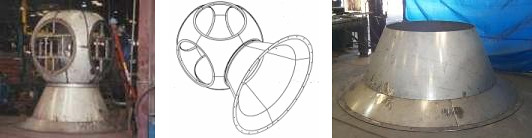
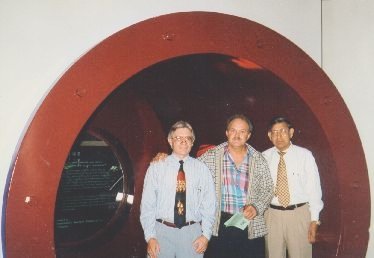
Sweco Fab, Inc., the ASME CODE fabrication subsidiary of PT&P, built the forward section of an International Space Station service module for NASA in Fall, 1999. The main purpose of the full-scale mock-up service module will be to replicate the International Space Station for use in astronaut training at NASA’s Neutral Buoyancy Lab (NBL).

The Neutral Buoyancy Lab, located at the Sonny Carter Training Facility near NASA Houston Johnson Space Center (JSC), is a large pool of water used in astronaut training to simulate the gravity conditions in space. The forward section manufactured by Sweco Fab, Inc., a wholly owned subsidiary of Piping Technology & Products, is made up of ASTM A-304L material and weighs approximately 2500 lbs. The unit was on display at NASA’s Inspection Day 1999 and will soon be employed in International Space Station astronaut training.

Read More

Personnel Protection Shields for High Temperature Lines

September 1, 2022
Personnel Protection Shields for High Temperature Lines

High-Temperature Personnel Protection Shields

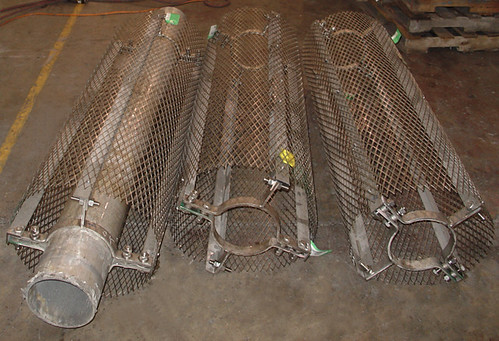
In industrial environments, safety is critical, especially around high-temperature piping systems. While full insulation may not always be required for process reasons, it’s necessary to protect personnel from accidental contact with hot surfaces. This is where personnel protection shields, also known as “touch guards” or “heat guards,” play a vital role. These shields are designed to create a physical barrier around hot pipes, vessels, and equipment, ensuring worker safety without requiring a complete insulation system.

The Ultimate Safeguard for Industrial Safety

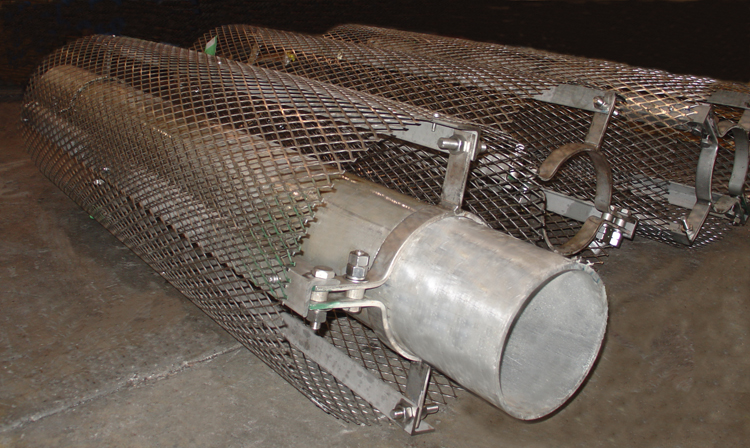
Personnel protection shields are made from materials that can withstand high temperatures, such as expanded metal, sheet metal, or perforated materials like stainless steel. The key to their effectiveness is in creating an air gap between the hot surface and the shield. This air gap, combined with the shield material’s ability to radiate heat, reduces the shield’s outer surface temperature, making it safe to touch. This simple design prevents burns and other injuries, safeguarding personnel in areas with high-temperature lines.

The Essential Barrier for Hot Lines

The personnel protection shields are used when insulating the line is not necessary but operating temperatures require safeguarding personnel from contact with the pipe. These shields are designed for 8″ pipe operating at 800°F and are made of 304 stainless steel, expanded and rolled to a 20″ diameter.

Improve your facility’s safety. Learn more about our custom personnel protection shield solutions.


Read More

Flue Gas Duct Damper

September 1, 2022

Flue Gas Duct Damper

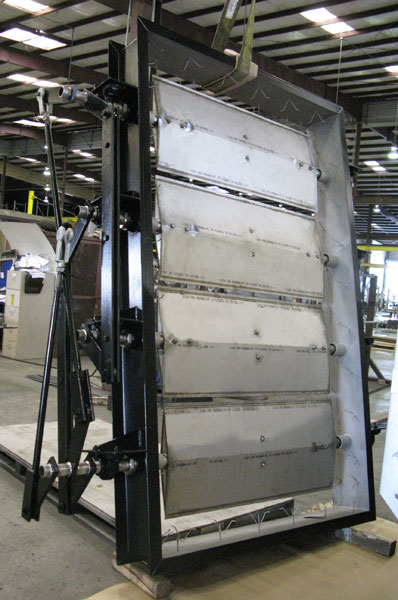
This damper was fabricated from a combination of 304 stainless steel and Inconel®. It is designed as a shut-off damper to control the flow of flue gas in an ammonia plant. The damper will be connected to a motor-driven control system by the linkage shown in the picture. The overall dimensions are 10′ x 6′ with a weight of 2,200 lb. It was painted with standard inorganic zinc primer and top coat per customer specifications. The damper went through visual inspection, dye-penetrant, and functional testing before being shipped to the customer. Refractory lining, utilized to withstand the high temperatures, will be added during installation.

Do you have an application that requires a damper? Get pricing today!
request-a-quote

Read More

4″ to 14″ Diameter Spectacle Blinds for Process Piping

September 1, 2022
4″ to 14″ Diameter Spectacle Blinds for Process Piping


4″ to 14″ Diameter Spectacle Blinds for Process Piping

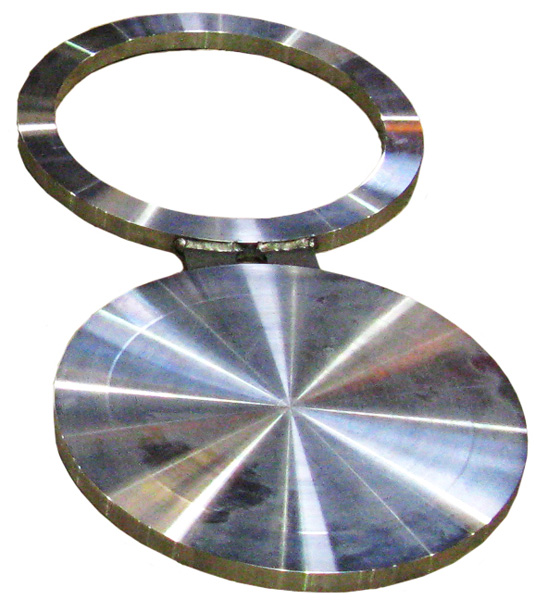
Sweco Fab, Inc., a division of PT&P, fabricated a variety of six spectacle blinds that will be used for selective line isolation. The spectacle blinds are fabricated from A516-70 carbon steel with sizes ranging from 4″ to 14″ diameter and per ASME B16.48 code. The function of a spectacle blind is to allow a line to be in either full shut-off mode or full flow mode, depending on which side is being utilized. Spectacle blinds are a lower cost alternative to double block and bleed valves where OSHA requires positive isolation of piping segments for safety reasons.

Want to learn more about spectacle blinds? View a webinar about Sweco Fab today!
access-our-webinar-archives

Read More

48" Diameter High Pressure Knock-out Drum for a Chemical Company

September 1, 2022

48" Diameter High Pressure Knock-out Drum for a Chemical Company

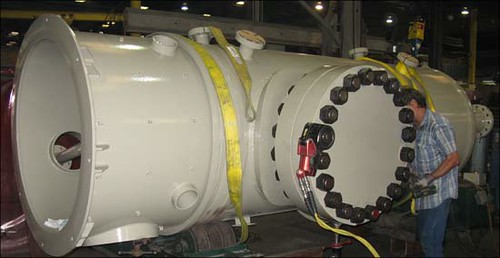
This high pressure knock-out drum has a 2.5″ thick shell fabricated from ASTM SA516 Grade 70, and a SA105 and SA350 carbon steel flange. The drum has a 48″ diameter, a total length of 15’8″ and weighs over 23,000 lb. It underwent a hydro-test and design test per ASME section VIII-1 “U” stamp vessel prior to shipment.

Do you require a vessel or knock-out drum for your project? Get pricing today!
request-a-quote

Read More
Top