Why Pre-Insulated Pipe Supports Are Essential for Steam Lines

February 26, 2026

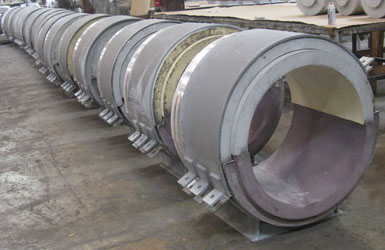
Large diameter hot shoes from Pipe ShieldsPlugging the Energy Leak: How Pre-Insulated Pipe Supports Fix Thermal Bridging

In a high-pressure steam environment, heat is your most valuable currency. You invest millions into high-grade boilers and miles of premium insulation to keep that heat where it belongs: inside the pipe. However, many power plants leave a hole in their pocket at every single hanging or resting point. When a bare metal pipe makes direct contact with a metal support, it creates a thermal bridge. This allows heat to bypass your insulation entirely, turning your pipe supports into accidental radiators that bleed energy into the atmosphere 24/7.

Real-world example: 48″ Guided Pre-Insulated Pipe Supports for High Temperatures

The “Heat Sink” Effect and the Science of the Thermal Break

Traditional pipe clamps act as heat sinks, drawing thermal energy away from the steam and through the support structure. This isn’t just an efficiency issue; it’s a reliability nightmare. Localized cooling at support points can lead to condensation and wet steam, which causes internal erosion and water hammer. To stop this, pre-insulated pipe supports use a high-compressive-strength insulating core, such as calcium silicate or heavy-duty polyurethane, to create a thermal break. By nesting the pipe within an insulated insert before the metal clamp ever touches it, you effectively “plug” the bridge, ensuring the insulation envelope remains continuous, and the BTU loss is neutralized.

The “Math of Loss” (in British Thermal Units-BTUs)

Consider a mid-sized power plant with 2,000 support points. If each uninsulated support loses just 150 BTUs per hour (a conservative estimate for high-pressure steam), the plant is hemorrhaging 300,000 BTUs every hour. Over a year of 24/7 operation, that equates to over 2.6 billion BTUs wasted. At current fuel prices, that silent leak is a direct hit to the bottom line that pre-insulated supports could have prevented.

Support Type

Estimated Heat Loss (Btu/hr)

Annual Energy Loss (MMBtu*)

System Impact

Standard “Bare” Metal Clamp 1,200 – 1,800 10.5 – 15.7 High risk of CUI; creates a heat sink.
Field-Wrapped Support 400 – 700 3.5 – 6.1 Inconsistent; prone to insulation crushing.
Pipe Shields Pre-Insulated Support 45 – 85 0.4 – 0.7 95% efficiency gain; maintains vapor barrier.


*Calculated based on 8,760 annual operating hours. MMBtu = 1 Million BTUs.

The Pipe Shields Standard: Engineered to Outlast the Outage

At Pipe Shields, we provide thermal integrity. Our pre-insulated pipe supports are engineered to withstand the extreme temperatures and mechanical loads of the power industry while maintaining a 360-degree vapor barrier. By integrating insulation and support into a single, factory-tested unit, we eliminate human error associated with field-wrapping and ensure your steam system operates at peak thermodynamic efficiency from day one.

Real-world example: 399 Pre-Insulated Pipe Supports for an LNG Facility

FAQ: Solving Your High-Temp Support Challenges

  • What is the best material for pre-insulated steam supports?
    For high-pressure steam, calcium silicate is the gold standard due to its high structural compressive strength and ability to withstand temperatures exceeding 1200°F without degrading.
  • Can’t we just wrap insulation over standard clamps?
    Field-wrapping over clamps is rarely effective. It leaves gaps where the clamp meets the pipe, allows for moisture ingress (CUI), and does not provide the structural thermal break that a pre-insulated insert provides.
  • How do pre-insulated supports impact installation time?
    Pipe Shields’ units are drop-in ready. Because the insulation and shield are pre-assembled, installation is significantly faster than traditional methods, which is critical during tight maintenance outages.
  • Do these supports handle vibration?
    Yes. Our high-density inserts are designed to absorb mechanical vibration and evenly distribute loads, preventing the insulation from crushing or powdering over time.

Plug the BTU Leak: Switch to Pipe Shields. Inefficient supports undermine your plant’s performance. Contact the Pipe Shields engineering team for a custom load calculation and see how our pre-insulated solutions can modernize your steam lines.

Read More

Choosing Between Pre-Insulated and Field-Wrapped Pipe Supports: What Engineers Need to Know

February 17, 2026

Cryogenic pre insulated pipe supportsWhen specifying components for chilled water or steam systems, the sticker price of a pipe support is often a distraction. The true cost of a support system isn’t found on the purchase order; it’s found in the frequency of insulation repairs and the energy lost to thermal bridging.

In comparing pre-insulated pipe supports to field-wrapped insulation, the Total Cost of Ownership (TCO) is telling a story that many engineers are starting to take seriously.

The Labor Trap: “Built on Site” vs. “Ready to Bolt”

The highest hidden cost of field-wrapping is the interrupted workflow between trades.

With traditional methods, a pipe is hung, then a separate insulation crew must return to cut, fit, and tape insulation around the support point. This creates a “stop-and-start” workflow that inflates man-hours.

In contrast, Pipe Shields’ pre-insulated supports feature a bolt-on design. Because the insulation and the load-bearing shield are integrated into a single unit, the pipe hanger and the insulation are installed in one motion.

  • Field-Wrapped: 30 to 45 minutes per point (multiple trades).
  • Pipe Shields: < 5 minutes per point (single trade).

As shown in the table below, the efficiency gains aren’t just marginal: they add efficiency back into a project’s timeline.

Comparative Analysis of Installation Labor (Per Support Point)

Phase of Installation
Field-Wrapped Method (Traditional)
Pre-Insulated Pipe Support (Pipe Shields)
Project Benefit of Pre-Insulated Pipe Supports (Pipe Shields)
Hanger/Support Setup 10–15 Minutes 5 Minutes (Bolt-on) Single-trade installation; no waiting for insulators.
Insulation Fitting 15–20 Minutes (Custom cutting/taping) 0 Minutes (Factory integrated) Eliminates jobsite cutting, scrap waste, and dust.
Vapor Barrier Sealing 10–15 Minutes (Complex around hangers) 2 Minutes (Simple jacket seal) Factory-bonded seal means no thermal bridging.
Inspection & QC 5 Minutes (Manual check for gaps) 1 Minute (Visual confirmation) Standardized components allow for “instant” visual sign-off.
Total Estimated Time 40–55 Minutes per point 8 Minutes per point Install 6+ units in the time it takes to wrap 1.
Estimates use average man-hours for a standard 4″ chilled water line. Savings may increase significantly for larger pipes or complex, restricted overhead environments.

Inspection Time and Quality Control

In critical environments such as data centers and hospitals, a single gap in a vapor barrier can lead to catastrophic condensation.

  • Field-Wrapped: Inspection is subjective. An inspector must verify that the jacketing is sealed perfectly at every odd-angled support.
  • Pre-Insulated: Quality is controlled in a factory setting. When you see the Pipe Shields unit bolted into place, you know the vapor barrier is intact, and the insulation density is uniform. This reduces the “re-work” rate during commissioning to nearly zero.

Long-Term Maintenance: The High Price of the Sag

Over time, traditional insulation at support points tends to compress under the pipe’s weight. This compression reduces the R-value and often tears the vapor barrier, leading to corrosion under insulation (CUI).

Pre-insulated pipe supports are engineered with high-compressive-strength inserts (such as calcium silicate or high-density polyurethane) that do not sag. By maintaining the insulation’s structural integrity, you eliminate the need for costly “strip-and-replace” maintenance projects in five years.

The Pipe Shields Value: Factory-Built Precision. Jobsite-Proven Speed.

At Pipe Shields Inc., we provide thermal certainty and take it seriously. Our pre-insulated pipe supports are engineered to eliminate thermal bridging and streamline the construction timeline. By moving the complexity from the field to our factory, we ensure that your piping system has a vapor barrier that stands the test of time. Protect your infrastructure and your bottom line with the “bolt-on” speed of Pipe Shields.

Pre-Insulated Pipe Support: Frequently Asked Questions

Is the initial cost of pre-insulated supports significantly higher?

While the upfront material cost is higher than for bulk insulation and a standard clevis hanger, the installed cost is typically lower due to an 80% reduction in specialized labor.

Can pre-insulated supports handle high-load seismic requirements?

Yes. Unlike field-wrapped insulation, which has zero structural integrity, Pipe Shields are designed to integrate with seismic bracing while maintaining a full thermal break.

How do these supports prevent corrosion under insulation (CUI)?

CUI usually starts where the vapor barrier is breached. Our supports feature a continuous jacket and sealed ends, ensuring that moisture never reaches the pipe surface at the most vulnerable point: the support.

Let’s Solve Your Support Point Challenges Together

Stop wasting man-hours on the lift and start building for the long term. Contact our engineering team today for a submittal package or a custom quote for your specific load requirements.

Read More

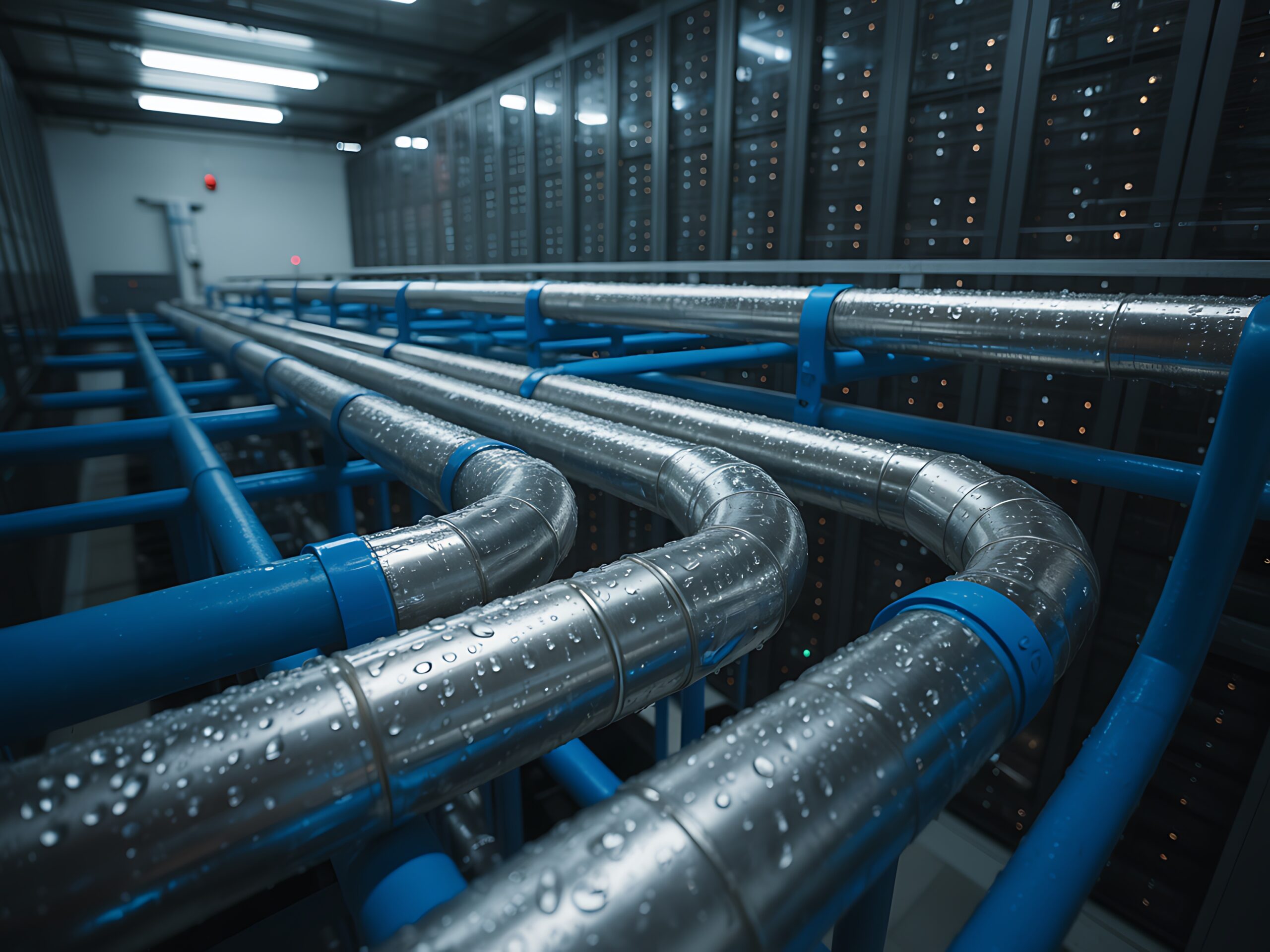
Pre-Insulated Pipe Supports: The Foundation of Efficient Data Center Cooling

February 12, 2026

Why Proper Pipe Support is Crucial for Data Center Efficiency

Pre-insulated pipe supports from Pipe Shields deliver effective thermal management.

Data centers are the backbone of the digital world, and keeping their servers cool is a mission-critical task. As data centers expand, the need for efficient and reliable cooling systems also increases. A crucial but often overlooked component of these systems is the pipe support. Traditional pipe supports can create thermal bridges, leading to energy waste and condensation. This is where pre-insulated pipe supports come in, offering a superior solution for data center cooling.

The Challenges of Keeping Data Centers Cool

Modern data centers are powerhouses of computing, but with great power comes the challenge of managing the tremendous heat they generate. As server densities increase and technologies such as AI and high-performance computing (HPC) become more prevalent, cooling systems must operate more efficiently than ever. Traditional cooling methods face several critical challenges that can compromise a data center’s performance, reliability, and bottom line.

  • Energy Waste and High Operational Costs: Cooling systems are a data center’s largest energy consumer, often accounting for up to 60% of a facility’s total energy costs. Any inefficiency in the cooling infrastructure directly translates to higher electricity bills and a larger carbon footprint. Traditional metal pipe supports create “thermal bridges”, pathways that allow heat from the surrounding environment to transfer directly into the cold pipes. This forces the cooling system to operate overtime, resulting in significant energy waste.
  • Condensation and Corrosion: A fundamental principle of data center cooling is maintaining precise temperature and humidity levels. When a cold pipe and a metal support come into direct contact, the support’s surface temperature can drop below the dew point, causing water vapor to condense on the support. This condensation creates a constant moisture risk, which can lead to:
    • Corrosion under insulation (CUI): Trapped moisture can corrode the pipe and its hangers, weakening the system over time.
    • Mold and mildew growth: A humid environment can promote microbial growth, posing health and safety risks.
    • Water damage: Condensation dripping onto sensitive electronic equipment can cause catastrophic failure and costly downtime.
  • Reduced Reliability and Maintenance Headaches: These thermal and moisture issues not only affect efficiency but also compromise the entire system’s reliability and overall performance. Corrosion can lead to leaks, premature equipment failure, and unexpected downtime: a data center operator’s worst nightmare. Maintenance becomes reactive, rather than proactive, with technicians constantly addressing issues caused by an inadequate support system.

The Smart Solution: Pre-Insulated Pipe Supports 

Pre-insulated pipe supports are a strategic solution that meets these challenges head-on. Unlike traditional supports, these components are engineered to provide both load-bearing capacity and a continuous thermal barrier.

  • Eliminating Thermal Bridging: The core of a pre-insulated pipe support is a high-density insulating material, such as polyurethane foam or cellular glass. This material is molded to fit the pipe and its support, creating a complete thermal break. By preventing direct metal-to-metal contact, these supports effectively block heat transfer from the environment to the cold pipes. This means your chilled water system works smarter, not harder, leading to a noticeable reduction in energy consumption and operational costs.
  • Controlling Condensation: With the thermal bridge eliminated, the support’s surface temperature remains above the dew point, preventing condensation. This critical yet straightforward design feature protects the piping from CUI, removing the risk of water damage to valuable IT equipment. This proactive approach to moisture control enhances safety and extends the lifespan of your entire cooling system.
  • Ensuring Long-Term System Reliability: By preventing corrosion and condensation, pre-insulated pipe supports contribute to a more robust and reliable infrastructure. This enables a more proactive maintenance strategy, reduces the risk of unexpected failures, and extends the service life of pipes, valves, and other cooling components. The initial investment in these advanced supports is quickly returned through significant savings on energy, maintenance, and potential repair costs.

When it comes to data center new builds and revamps, every component must perform well. For data center operators, the decision to use pre-insulated pipe supports is a direct investment in operational efficiency. The long-term benefits of reduced energy consumption, lower maintenance expenses, and the enhanced lifespan of the cooling infrastructure quickly offset the upfront cost. When every watt counts, these supports are a smart and sustainable choice for any modern data center.

A Foundation of Trust: Your Data Center’s Future, Supported by Pipe Shields

For over 50 years, Pipe Shields, Inc., a subsidiary of Piping Technology and Products, has been a leader in the design and manufacturing of pre-insulated pipe supports. Decades of engineering expertise and a commitment to innovation have led to a unique line of high-quality, cost-efficient supports that prevent thermal bridging and safeguard your data center’s chilled-water systems.

Our pre-insulated pipe supports are engineered to eliminate heat transfer, prevent corrosive condensation, and ensure the long-term health of your critical cooling infrastructure. With a product line spanning commercial applications and specialized environments for cryogenic and high-temperature use, Pipe Shields delivers a tailored solution for your specific needs.

We support your operations so you can focus on what matters most: powering the digital world.

Upgrade your data center’s cooling system? Request a catalog today to learn how our high-performance pre-insulated pipe supports can help you save energy and reduce costs in your data center operations.

Read More

Pre-Insulated Pipe Supports in Semiconductor Manufacturing: A Critical Role in Temperature Control

February 9, 2026

Precision in Chip Production

Pre-insulated pipe supports are critical in semiconductor manufacturing, from preventing thermal bridging to maintaining a clean room environment.Semiconductor manufacturing is defined by precision. The fabrication of a single microchip involves hundreds of complex steps, each requiring an environment free of contamination or temperature fluctuations. A single microscopic particle or a change of a few degrees can render a wafer, and the thousands of chips it contains, useless, leading to huge financial losses.

At the center of a semiconductor fab’s infrastructure are the piping systems that transport critical resources such as ultra-pure water (UPW), specialty chemicals, and chilled coolant. These systems are the foundation of the production process, and any compromise to their integrity can directly impact yield and reliability. This is where pre-insulated pipe supports are critical.

Overcoming the Challenges of a Cleanroom Environment

Semiconductor manufacturers face unique challenges that pre-insulated pipe supports are specifically designed to address:

  • Temperature Stability: Many chip fabrication processes, such as etching and thin-film deposition, are extremely temperature-sensitive. The coolant and UPW lines feeding these machines must maintain precise, consistent temperatures. Traditional metal pipe supports create a thermal bridge, allowing heat from the warmer cleanroom to transfer into the cold pipes. This temperature gain forces chillers to work harder, increasing energy consumption and potentially causing temperature fluctuations that can lead to wafer defects and reduced yields. Pre-insulated pipe supports eliminate this thermal bridge, ensuring the fluid temperature remains stable throughout the distribution system.
  • Contamination Control: Cleanrooms are meticulously controlled environments in which airborne particles are measured at parts per billion. The introduction of any contaminant, from dust to corrosion particles, can ruin a batch of wafers.
    • Condensation: Metal pipe supports in contact with cold pipes often drop below the dew point, causing water to condense on them. This condensation can drip onto sensitive equipment or promote microbial growth, compromising cleanroom air quality and leading to product defects.
    • Corrosion: The constant presence of condensation moisture can cause corrosion under insulation (CUI) on pipes and hangers. These corrosion particles can enter the cleanroom air or even the piping system itself, introducing a critical source of contamination.
    • Pre-insulated pipe supports provide a continuous, impermeable thermal barrier that prevents condensation from forming on the pipe. This not only protects against corrosion but also preserves the ultra-clean environment, directly improving chip yield.

The Pre-Insulated Advantage: Boosting Yield and Efficiency

By tackling these challenges, pre-insulated pipe supports offer tangible benefits that aid in semiconductor manufacturing:

  • Higher Yields: Preventing condensation and eliminating corrosion and biological contaminants directly reduces the risk of wafer defects. A cleaner, more stable environment means a higher percentage of usable chips from each wafer.
  • Energy Efficiency: By stopping thermal bridging, these supports reduce the workload on cooling systems. This translates into lower energy consumption, a major operational cost for a semiconductor fabrication plant.
  • System Reliability: Protecting the piping from corrosion extends the life of the entire cooling and fluid distribution system. This reduces maintenance requirements, minimizes the risk of unexpected leaks or failures, and ensures maximum uptime: a non-negotiable in an industry where downtime can cost millions.

Choose Pipe Shields to Protect Your Cleanroom Environment

At Pipe Shields, we recognize that the integrity of your semiconductor fabrication facility is crucial. Our pre-insulated pipe supports go beyond simple structural support; they are a critical component of your yield and efficiency strategy. We provide precision-engineered supports that eliminate thermal bridging, ensuring the precise temperature control required for sensitive processes such as etching and thin-film deposition.

Unlike traditional supports that risk costly condensation and corrosion, our products create a continuous thermal barrier, safeguarding your ultra-pure fluid systems and preserving the integrity of your cleanroom environment. By choosing Pipe Shields, you’re not just buying a product; you’re investing in a partner dedicated to boosting your chip yield, reducing energy costs, and ensuring the long-term reliability of your fabrication facility.

CTA: Improve the reliability and efficiency of your semiconductor fabrication process. Request a catalog today to discover how our high-performance, pre-insulated pipe supports can protect your operations and boost your bottom line.

Read More

The Cold Truth: How Chilled Water Systems & Pre-Insulated Pipe Supports Safeguard Dairy Production

February 3, 2026

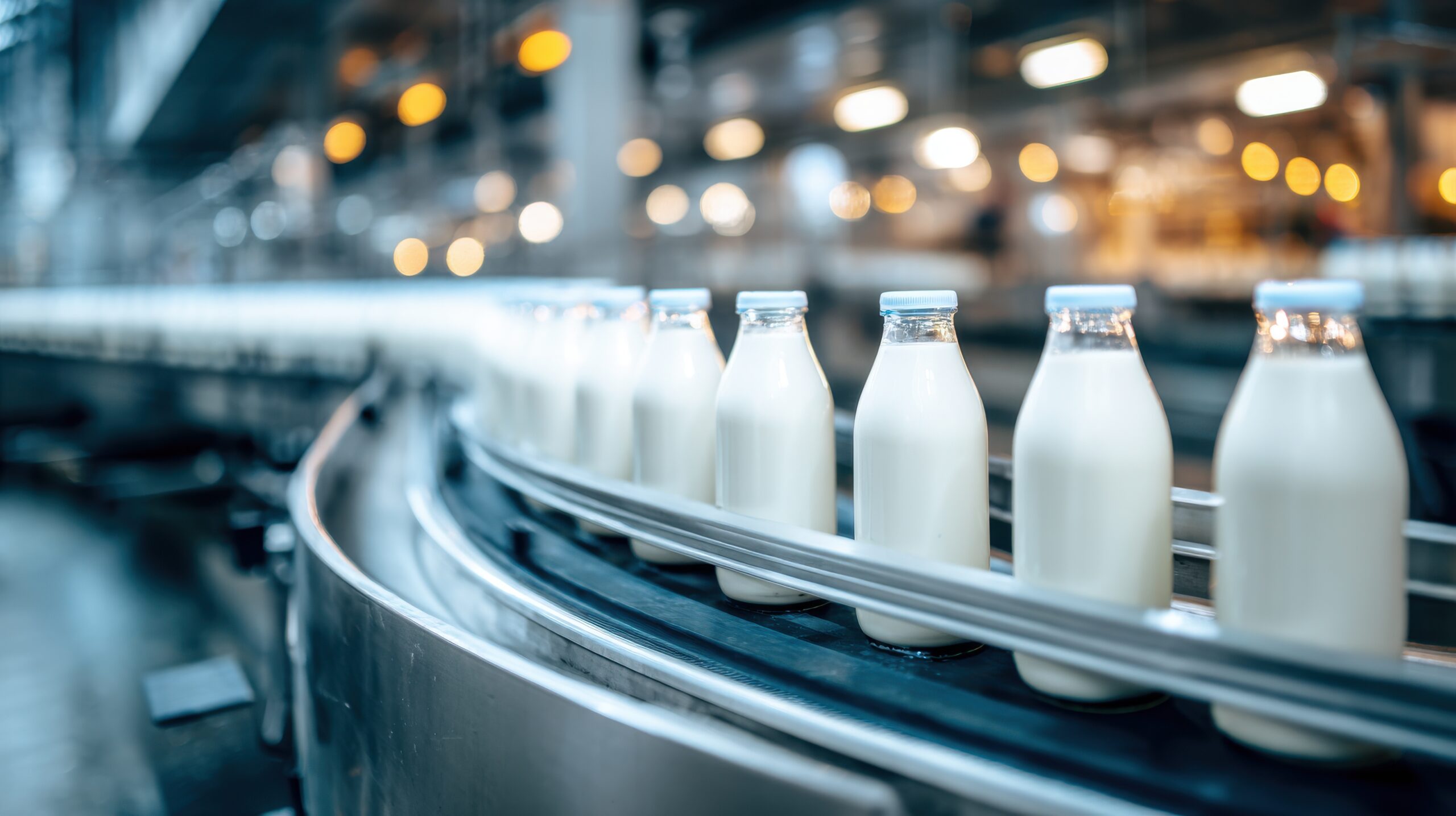
Pre-Insulated pipe supports from Pipe Shields can help safeguard dairy production.

Dairy processing is a race against time and temperature. From pasteurization to fermentation, precise thermal control is key, not only for product quality but, more critically, for food safety. At the heart of many dairy operations lies the unsung hero: the chilled water system. This intricate network is responsible for rapidly cooling dairy products, maintaining optimal storage temperatures, and supporting critical processes.

But what happens when this essential system isn’t perfectly insulated? The answer can lead to significant issues, including energy waste, operational downtime, and a heightened risk of microbial contamination. This is where the science of chilled water meets the innovation of pre-insulated pipe supports.

The Role of Chilled Water in Dairy Processing

Chilled water, or glycol-chilled water, is critical for temperature control in a dairy plant. It’s circulated through heat exchangers and jacketed vessels to perform a multitude of functions:

  • Rapid Cooling Post-Pasteurization: After pasteurization (a process that heats milk to destroy harmful bacteria), milk must be rapidly cooled to a safe storage temperature to prevent the growth of thermophilic organisms and maintain its quality. Chilled water systems are essential for this rapid thermal transition.
  • Temperature Control During Fermentation: For products such as yogurt and cheese, precise temperature control is essential to enable specific bacterial cultures to thrive and produce the desired flavors and textures.
  • Ingredient Cooling: Many ingredients, such as cream, cultures, or flavorings, require specific cold temperatures before being added to products.
  • Equipment Cooling: Chilled water can also be used to cool processing equipment, preventing overheating and ensuring consistent operation.
  • Storage and Distribution: Maintaining low temperatures throughout storage tanks and distribution lines is crucial to extending shelf life and preventing spoilage.

Without an efficient, reliable chilled-water system, dairy products would be susceptible to bacterial growth, spoilage, and reduced shelf life.

The Silent Threat: Condensation and Microbial Growth

While chilled water is beneficial, its low temperature introduces a potential hazard: condensation. When cold pipes carrying chilled water are exposed to warmer, humid ambient air, the air’s moisture condenses on the pipes’ outer surfaces. This is the same phenomenon you see on a cold drink glass on a hot day. Why is condensation a problem in a dairy plant?

The Ideal Breeding Ground for Mold and Bacteria

  • Moisture Source: Condensation provides a constant source of moisture, a key factor in the growth of mold and bacteria.
  • Organic Matter: Even in the cleanest environments, airborne dust and microscopic organic particles can settle on moist surfaces, providing a food source for microbes.
  • Compromised Hygiene: Condensation dripping onto processing equipment, floors, or even directly onto products creates an unsanitary environment, increasing the risk of cross-contamination and compromising stringent food safety standards.
  • Insulation Degradation: Over time, condensation can saturate traditional insulation materials, reducing their effectiveness and leading to further energy loss, which in turn drives a cycle of increased condensation.

In production, when hygiene and product safety are non-negotiable, visible mold or bacterial growth on pipe surfaces is not only an aesthetic issue but a critical food safety concern that can lead to product recalls, reputational damage, and regulatory penalties.

The Solution: Pre-Insulated Pipe Supports as the First Line of Defense

This is where pre-insulated pipe supports are indispensable for any dairy processing facility that uses chilled-water systems. They are specifically designed to address condensation and thermal bridging.

How Pre-Insulated Pipe Supports Combat Condensation and Contamination:

  1. Continuous Thermal Barrier: Unlike conventional supports that interrupt the insulation, pre-insulated supports integrate a high-density, closed-cell insulating material directly into their structure. This creates a seamless thermal envelope around the pipe, preventing cold spots and eliminating thermal bridges where condensation typically forms.
  2. Prevents Surface Condensation: By maintaining the support’s outer-surface temperature above the dew point of the surrounding air, these supports effectively prevent condensation on the surface. No condensation means no breeding ground for mold and bacteria.
  3. Hygienic Design: Many pre-insulated supports for food environments feature non-porous, easy-to-clean outer jackets (e.g., PVC or stainless steel cladding). This design minimizes crevices where pathogens can accumulate, enabling thorough washdowns, which are essential for maintaining sanitary conditions.
  4. Energy Efficiency: Beyond preventing contamination, eliminating thermal bridging significantly reduces heat gain into the chilled water system. This reduces chiller workloads, resulting in substantial energy savings and lower operational costs for the dairy plant.
  5. Long-Term Durability: By preventing insulation saturation, pre-insulated supports ensure the longevity and consistent performance of the entire insulation system, reducing maintenance needs and extending the lifespan of the piping infrastructure.

By strategically installing pre-insulated pipe supports throughout chilled-water systems, dairy plants can mitigate condensation risks, ensuring a hygienic processing environment and the integrity of their dairy products.

Safeguarding Your Dairy Operations with Pipe Shields

In dairy processing, maintaining hygiene and precise temperature control is essential. Pipe Shields understands these critical needs. Our advanced pre-insulated pipe supports are engineered to provide an uninterrupted insulation barrier, which helps prevent condensation on chilled-water lines. By eliminating moisture accumulation on pipe surfaces, Pipe Shields helps dairy plant operations proactively prevent the conditions that lead to mold and bacterial growth, ensuring food safety compliance, reducing contamination risks, and protecting your valuable products and reputation.

Improve the hygiene and safety of your dairy processing facility.  Request a quote and discover how our pre-insulated pipe support solutions can fortify your cold chain operations.

Read More
Top