Why Pre-Insulated Pipe Supports Are Essential for Steam Lines

February 26, 2026

Large diameter hot shoes from Pipe ShieldsPlugging the Energy Leak: How Pre-Insulated Pipe Supports Fix Thermal Bridging

In a high-pressure steam environment, heat is your most valuable currency. You invest millions into high-grade boilers and miles of premium insulation to keep that heat where it belongs: inside the pipe. However, many power plants leave a hole in their pocket at every single hanging or resting point. When a bare metal pipe makes direct contact with a metal support, it creates a thermal bridge. This allows heat to bypass your insulation entirely, turning your pipe supports into accidental radiators that bleed energy into the atmosphere 24/7.

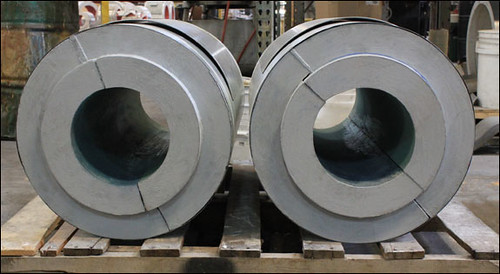
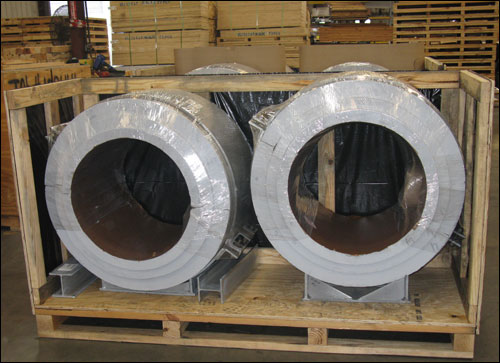
Real-world example: 48″ Guided Pre-Insulated Pipe Supports for High Temperatures

The “Heat Sink” Effect and the Science of the Thermal Break

Traditional pipe clamps act as heat sinks, drawing thermal energy away from the steam and through the support structure. This isn’t just an efficiency issue; it’s a reliability nightmare. Localized cooling at support points can lead to condensation and wet steam, which causes internal erosion and water hammer. To stop this, pre-insulated pipe supports use a high-compressive-strength insulating core, such as calcium silicate or heavy-duty polyurethane, to create a thermal break. By nesting the pipe within an insulated insert before the metal clamp ever touches it, you effectively “plug” the bridge, ensuring the insulation envelope remains continuous, and the BTU loss is neutralized.

The “Math of Loss” (in British Thermal Units-BTUs)

Consider a mid-sized power plant with 2,000 support points. If each uninsulated support loses just 150 BTUs per hour (a conservative estimate for high-pressure steam), the plant is hemorrhaging 300,000 BTUs every hour. Over a year of 24/7 operation, that equates to over 2.6 billion BTUs wasted. At current fuel prices, that silent leak is a direct hit to the bottom line that pre-insulated supports could have prevented.

Support Type

Estimated Heat Loss (Btu/hr)

Annual Energy Loss (MMBtu*)

System Impact

Standard “Bare” Metal Clamp 1,200 – 1,800 10.5 – 15.7 High risk of CUI; creates a heat sink.
Field-Wrapped Support 400 – 700 3.5 – 6.1 Inconsistent; prone to insulation crushing.
Pipe Shields Pre-Insulated Support 45 – 85 0.4 – 0.7 95% efficiency gain; maintains vapor barrier.


*Calculated based on 8,760 annual operating hours. MMBtu = 1 Million BTUs.

The Pipe Shields Standard: Engineered to Outlast the Outage

At Pipe Shields, we provide thermal integrity. Our pre-insulated pipe supports are engineered to withstand the extreme temperatures and mechanical loads of the power industry while maintaining a 360-degree vapor barrier. By integrating insulation and support into a single, factory-tested unit, we eliminate human error associated with field-wrapping and ensure your steam system operates at peak thermodynamic efficiency from day one.

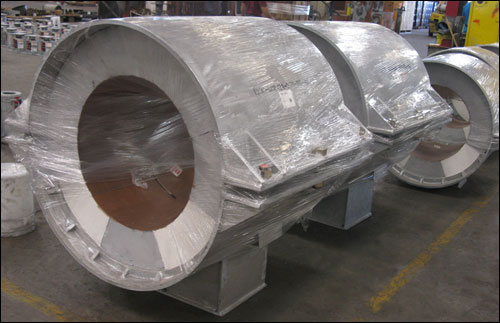
Real-world example: 399 Pre-Insulated Pipe Supports for an LNG Facility

FAQ: Solving Your High-Temp Support Challenges

  • What is the best material for pre-insulated steam supports?
    For high-pressure steam, calcium silicate is the gold standard due to its high structural compressive strength and ability to withstand temperatures exceeding 1200°F without degrading.
  • Can’t we just wrap insulation over standard clamps?
    Field-wrapping over clamps is rarely effective. It leaves gaps where the clamp meets the pipe, allows for moisture ingress (CUI), and does not provide the structural thermal break that a pre-insulated insert provides.
  • How do pre-insulated supports impact installation time?
    Pipe Shields’ units are drop-in ready. Because the insulation and shield are pre-assembled, installation is significantly faster than traditional methods, which is critical during tight maintenance outages.
  • Do these supports handle vibration?
    Yes. Our high-density inserts are designed to absorb mechanical vibration and evenly distribute loads, preventing the insulation from crushing or powdering over time.

Plug the BTU Leak: Switch to Pipe Shields. Inefficient supports undermine your plant’s performance. Contact the Pipe Shields engineering team for a custom load calculation and see how our pre-insulated solutions can modernize your steam lines.

Read More
Pre-Insulated vs. Welded: Why Choose Pre-Insulated Pipe Supports Over Direct-to-Pipe Attachment

December 16, 2025

Carousel images 04 01

The Foundation of Long-Term Pipe Performance

When it comes to industrial and commercial piping, the choice of pipe support is not a minor detail—it’s a critical decision that impacts your operational budget, energy footprint, and system lifespan. While direct-to-pipe attachment might seem like the simpler option, it introduces fundamental flaws that lead to high long-run costs.

This article explores why choosing pre-insulated supports from Pipe Shields is the superior strategy compared to conventional direct welding or attachment, delivering unmatched benefits in energy efficiency, reduced heat loss, long-term budget savings, easy, cost-effective maintenance, and pipeline protection.

The Hidden Costs of Direct-to-Pipe Attachment

Directly attaching or welding a support to a pipe, often called a “hard connection,” creates a severe thermal and mechanical weak point.

The Thermal Leak: Heat Loss and Energy Waste

A metal support welded directly to a hot or cold insulated pipe bypasses the insulation, creating a “thermal bridge.” This metal pathway acts like a heat sink (for hot pipes) or a heat source (for cold pipes), rapidly transferring thermal energy to the outside environment or the support structure.

  • Massive Energy Inefficiency: This constant heat transfer leads to substantial energy loss, forcing systems to work harder, consuming more fuel or electricity, and inflating utility bills. What you save on installation, you quickly spend on wasted energy.
  • Condensation Risk: In cryogenic or chilled water systems, the cold surface of the support where it meets the pipe drops below the ambient dew point, causing immediate condensation. This moisture saturation destroys the adjacent conventional insulation, leading to Corrosion Under Insulation (CUI)—an expensive form of pipe degradation.

The Structural Risk: Damage and Leaking

Direct welding introduces material stress and maintenance complexity:

  • Stress Concentrations: Welding alters the metallurgy of the pipe material at the connection, creating a high-stress concentration. Over time, due to thermal expansion, vibration, and system pressure, this can lead to fatigue cracking and potential leaking.
  • Complex Maintenance: If the support needs repair or replacement, it often requires cutting and re-welding, which demands extensive downtime and specialized labor, whereas minimal/no welding is required for initial installation with pre-insulated supports.

The Pipe Shields Advantage: Why Pre-Insulated Supports Win

Pre-insulated supports are engineered to solve the inherent problems of direct attachment, offering a solution that pays for itself over the life of the pipeline.

1. Eliminating the Thermal Bridge

Pre-insulated supports feature a high-density, load-bearing insulation material (such as calcium silicate or polyisocyanurate) that is factory-installed between the pipe and the metal support shield.

  • Maximum Heat Retention: The load-bearing insulation material provides a continuous thermal break, effectively preventing heat loss or gain and ensuring the insulation system remains intact. This adherence to thermal specifications is crucial for long-run budget savings through sustained energy efficiency.
  • CUI Prevention: By maintaining the pipe surface temperature above the dew point, these supports prevent condensation that causes CUI, actively protecting the pipeline from damage and leaks.

2. Easy, Economic, and Non-Invasive Installation

Pipe Shields’ pre-engineered solutions are designed for speed and simplicity.

  • Minimum and No Welding Required: Unlike complex connections, pre-insulated supports typically clamp onto the pipe. This non-invasive method eliminates the need for hot-work permits and costly field welding, significantly reducing installation time and costs.
  • Economic Maintenance: Because they are bolted or clamped, the supports can be easily inspected, maintained, or replaced without damaging the pipe or disrupting the thermal integrity of the system. This translates directly into easy, cost-effective maintenance.

3. Long-Term System Integrity

The use of a support shell and a load-bearing insert ensures that the mechanical load on the pipe is evenly distributed across its surface without damaging the pipe or the insulation, protecting the overall system from premature failure.

Pre-Insulated Pipe Supports for High Temperatures at a Phenol Plant in Texas

Choosing pre-insulated supports is not an expense; it is a vital investment in the long-term reliability and cost-effectiveness of your operation.

While direct attachment offers a minimal upfront cost saving, it guarantees ongoing energy waste, thermal failure, and future maintenance nightmares. Pipe Shields’ pre-insulated supports deliver a complete solution that maximizes energy performance, ensures code compliance, and future-proofs your pipeline against corrosion and structural failure.

Ready to Eliminate Thermal Bridges and Slash Operating Costs?

Invest in Pipe Shields’ pre-insulated pipe supports to slash energy waste, eliminate costly maintenance, and ensure the long-term efficiency of your critical piping systems. Pipe Shields pioneered the pre-insulated support now known across the industry as a pipe shield. We’re ready to leverage 50 years of experience to protect your pipeline and connected components.

Request a custom quote on how our pre-insulated support solutions can be engineered to deliver superior energy efficiency and long-term savings for your next project. Don’t let your supports be your system’s weakest link—build on a solid foundation with Pipe Shields.

Read More

High-Temperature Supports Designed for a Petrochemical Plant

May 3, 2021


Pipeshields insulated supports 138055

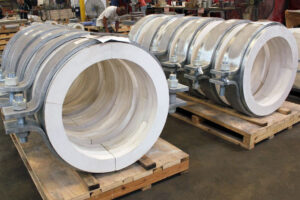
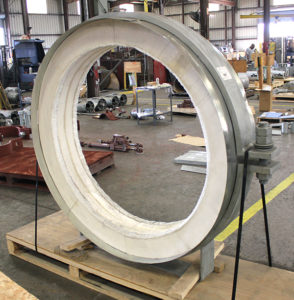
Pipe Shields, Inc., a division of PT&P designed pre-insulated pipe supports for a high-temperature pipeline at a petrochemical plant overseas. This style of insulated support is designed to be compact, easy to install, and eliminate the need for field welding. The insulation is 5-1/2″ thick, utilizing 18 lb. and 28 lb. pcf high-density calcium silicate. The “hot shoes” are fabricated from carbon steel and hot-dipped galvanized for corrosion protection. They are rated for temperatures from +40°F to +1800°F. QC inspections and dimensional tests were performed before the expedited shipment.

Such insulated supports are used for chilled water, hot water, and steam line applications in industries ranging from pharmaceutical, semiconductor, paper mills, chemical plants, data centers, biofuels, and food processing, to name a few. Piping Technology and Products, through its subsidiary, industry leader, and pioneer, Pipe Shields, has supplied to all these markets in the USA and internationally for over 45 years. Most recently, we made a large investment to automate manufacturing in our Houston plant to increase throughput and yield to support our customers’ needs for just-in-time deliveries, reducing cash requirements on projects.

View Pipe Shields’ Model D3100 – Insulated 2-Bolt Hanger

Read More

Cold Insulated Pipe Anchors with Axial Stops

August 15, 2011

Cold insulated pipe anchors with axial stops

Cryogenic pipe supports, ranging in diameter from 6″ to 38″, were designed to support and insulate piping in an LNG receiving and regassification plant. The “cold shoe anchors” were designed for temperatures down to -260°F and a load range of 26,000 lb. to 210,000 lb. A combination of high density polyurethane foam (PUF) and Permali® was used for the insulation. The center stops that are welded to the process pipe were built from 304 stainless steel, and carbon steel was used for the remainder of the shoe.

Cold insulated pipe anchors with axial stops

Do you have a need for cold shoes in your piping system? Get pricing today!

request-a-quote

Read More
Top