
Some of the most consequential inventions in industrial history don’t come from laboratories or R&D departments. They come from someone looking at the way things have always been done and asking a question no one else thought to ask.
That’s exactly how Pipe Shields, today a division of Piping Technology & Products, Inc. (PT&P), came to exist. And the story behind it is as unconventional as the product itself.
The Problem No One Was Trying to Solve
For decades, the standard approach to supporting insulated piping was unchanged and unchallenged. Engineers clamped directly onto the pipe, then wrapped insulation around the assembly, cutting holes in it where the support hardware needed to pass through. It was labor-intensive, field-fabricated at every support location, and thermally disastrous.
When a pipe runs at 1,000 degrees Fahrenheit, every clamp in direct contact operates at the same temperature reading. Carbon steel, rated only to 600°F, couldn’t even be used without upgrading to expensive high-alloy materials. Heat bled out at every support location, visible as rising steam along refinery and power plant lines across the country. The industry accepted it. No one questioned it. It was in the textbook.
“That’s a textbook approach,” recalls Albert Dizon, General Manager at Pipe Shield who worked directly alongside the company’s founder. “If you look at a textbook right now, that’s how you support a pipe. You go directly to the pipe, you weld directly to the pipe, and then you insulate around it.”
The Inventor – William J. McClellan
William J. McClellan, an industrial engineering graduate of San Jose State University, was not a piping industry insider. He was a self-made entrepreneur who had built his early fortune converting warehouses into racquetball courts across California. He never believed in working as an employee. Instead, he was a systems thinker who instinctively looked for inefficiencies and sought practical ways to solve them.
His path into the piping world was unexpected. Converting warehouses into enclosed commercial facilities in the 1970s meant dealing with fire suppression systems, hot water piping, and mechanical infrastructure at every project. McClellan saw pipes being supported the conventional way, clamp onto the pipe, insulate around it, again and again. Then he started driving past the Bay Area refineries. Shell. Chevron. Miles of insulated high-temperature piping, steam escaping visibly from support locations along every line.
“He knows the market is there,” Albert says. “He knows the need is there.”
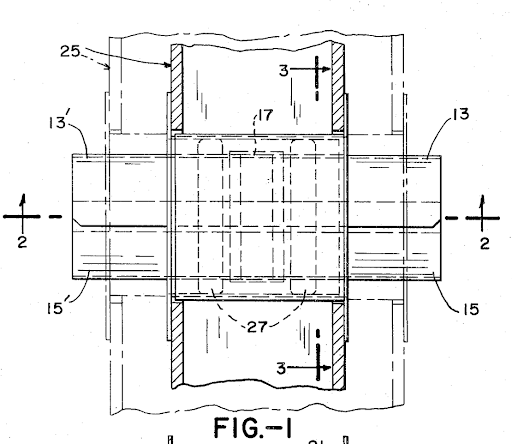
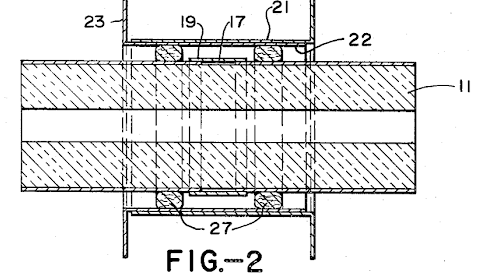
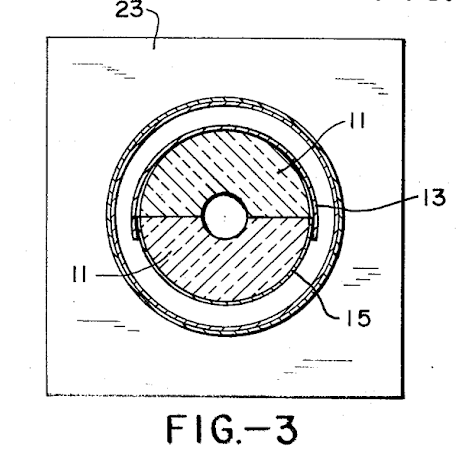
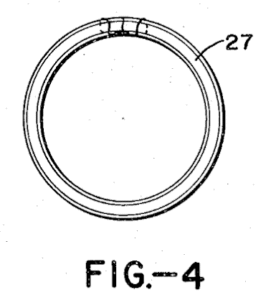
McClellan’s core insight was simple and, at the time, considered impractical by most in the field: move the support to the outside of the insulation. Eliminate the thermal bridge. The challenge was structural, standard pipe insulation is soft and incapable of bearing load. His answer was to replace it at the support location with a high-density, load-bearing insulation module, pre-fabricated offsite and engineered to carry the full weight of the pipe without ever making metal-to-metal contact.
The order changed from pipe → clamp → insulation to pipe → insulation → clamp. That reversal was the invention.
A Radical Idea Becomes Reality
To many engineers, the concept seemed impossible. Conventional insulation materials could not support the weight of piping systems, and the industry had long accepted direct-to-pipe supports as the only practical solution.
McClellan saw things differently.
Determined to prove the concept, he partnered with engineering experts from Bechtel Corporation and leveraged the testing capabilities of Lawrence Livermore National Laboratory. Together, they worked to validate an entirely new approach to supporting insulated piping systems, one that reduced heat transfer without compromising structural integrity.
The concept was so fundamentally different from accepted industry practice that it ultimately earned federal patent protection. In 1974, McClellan was granted a U.S. Patent for a “Thermal Shield,” formally documenting the innovation that would become the foundation of Pipe Shields’ technology and establishing the company as the original pioneer of pre-insulated support systems.
As Albert Dizon puts it:
“Nobody had ever done that before.”
Taking It to Market – One Engineer at a Time
McClellan didn’t wait for the industry to come to him. He built product samples, loaded a trailer behind his SUV, and drove coast to coast, east first, then back through every state, spending months on the road, stopping at engineering firms, project offices, and industrial facilities, and putting the product directly in front of design engineers.
Doors were slammed, and skeptics were plentiful. But some engineers said: Let’s try it. And the results spoke clearly. The product performed. Heat loss at support locations was eliminated. Field installation time dropped dramatically compared to conventional methods. Word began to spread through engineering networks.
Critically, McClellan worked to get the pre-insulated support recognized by ASME, the American Society of Mechanical Engineers, whose codes govern piping system design across industries. With backing from Bechtel and Lawrence Livermore, he secured language in the ASME code stating that for insulated lines, pre-insulated pipe supports may be used. It wasn’t yet a standard. But it was code-approved, and for a design engineer, that was enough to justify specifying it.
The Intel Specification – A Market-Defining Win
The most significant commercial breakthrough came when McClellan convinced the design engineers at what would later become Intel Corporation, then operating under the names of its founders, Gordon Moore and Robert Noyce, to adopt Pipe Shields as the specified support solution across all of their facilities.
“All of Intel’s plants domestically and worldwide, their specs only have Pipe Shields model numbers on them,” Albert says. “If you look at every Intel spec right now, you’d only see Pipe Shields.”
That single specification incorporated the product into Intel’s global facility standards. It became one of the most powerful reference points in the company’s commercial history, proof that the pre-insulated support wasn’t a niche solution. It was enterprise-grade, validated by one of the world’s most demanding facility operators.
From San Jose to Vacaville – and into PT&P
From a small rented shop in San Jose, Pipe Shields grew steadily through the late 1970s and 1980s. As demand expanded into larger pipe sizes, 24, 36, and 48 inches, McClellan sold his remaining racquetball holdings and invested in a dedicated manufacturing facility in Vacaville, California, capable of handling the full scope of what the market required.
The timing of the product’s market growth was not coincidental. The 1970s oil crisis had made energy conservation a primary concern across industrial sectors. McClellan’s product offered a direct, quantifiable answer: less heat loss at every support location, lower fuel consumption at every boiler and steam turbine. Heat was money. Pre-insulated supports stopped the loss.
Following McClellan’s passing in the late 1990s, the business was acquired by Piping Technology & Products in 2004, bringing Pipe Shields into a manufacturing and engineering platform with the resources to serve the global market at scale.
The Standard Bearer, Then and Now
Today, Pipe Shields operates as a division of Piping Technology & Products, continuing to manufacture the pre-insulated pipe supports that William McClellan invented, patented, and brought to market through decades of determined, ground-level work. The product line, organized across the alphabetical series that McClellan himself developed to help engineers specify the right support for every application, remains the reference standard in facilities worldwide.
The pre-insulated pipe support is not a new idea to the market. It is the market, and Pipe Shields created it.
